
Less than 10 mins
Soft Brands: Where Place Shapes Identity
Hospitality has always been about place. But as global hotel groups expand their portfolios, the challenge is becoming more nuanced: how can a property feel unmistakably of its location, while still carrying the reassurance of a recognised global brand?
Soft brands create a different kind of opportunity for design. Instead of beginning with a fixed identity that is then adapted to different locations, the starting point can be the place itself. The building, neighbourhood, history, culture and character of the property become part of the creative material. The designer is not simply applying a brand to a hotel; they are helping uncover what the hotel’s brand could be.
The hotel needs to feel individual enough to have a point of view, but connected enough to benefit from the trust, infrastructure and familiarity of the global hospitality brand.
The answer is not to choose between the two. It is to design the relationship between them. That balance creates something more nuanced than either a fully independent hotel or a traditional chain property. It creates a hotel with its own voice, within a larger conversation.
This was the starting point for I-AM’s work on Hilton’s Curio Collection, where individuality is not treated as a departure from the global brand, but as part of its character.
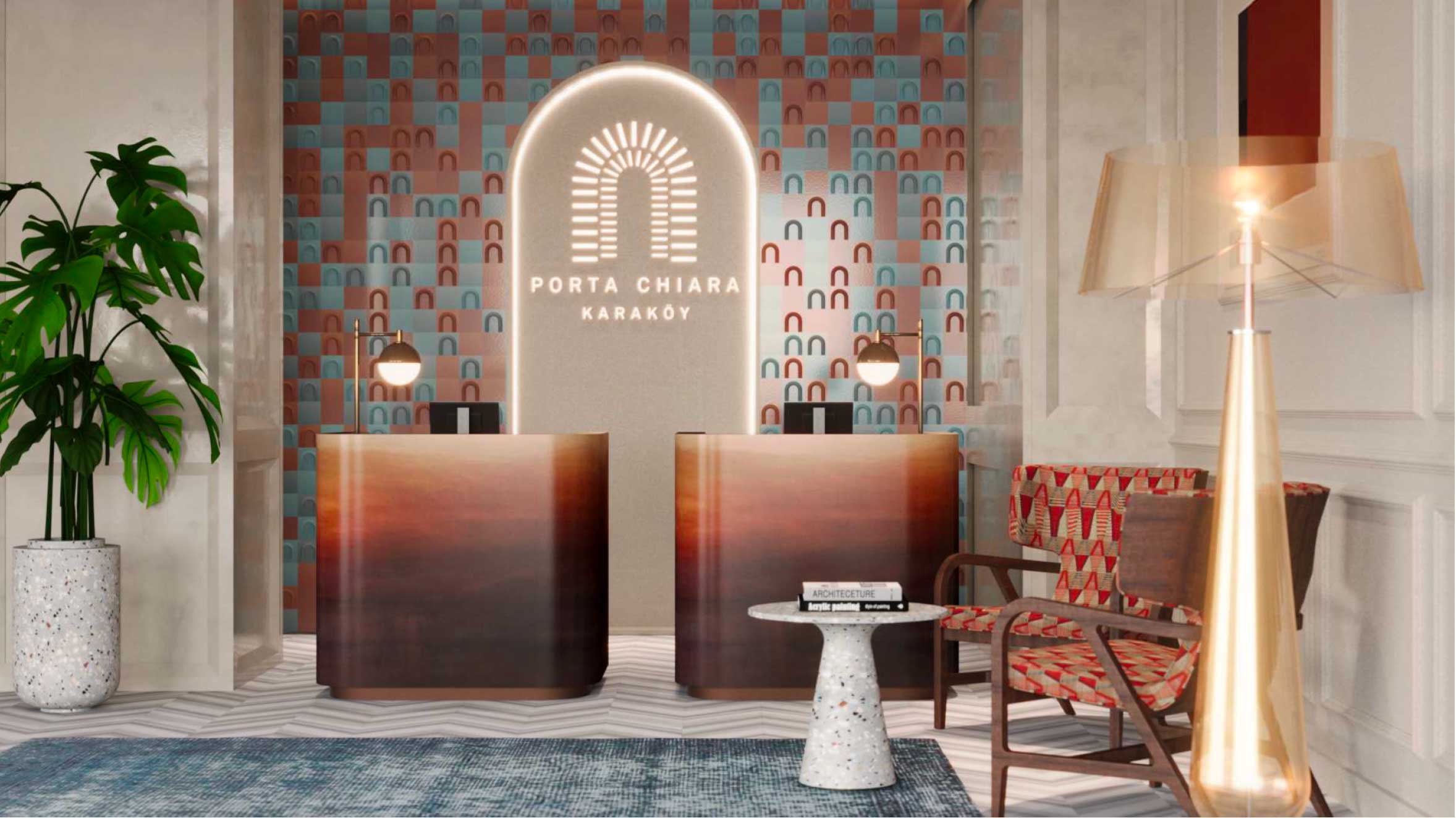
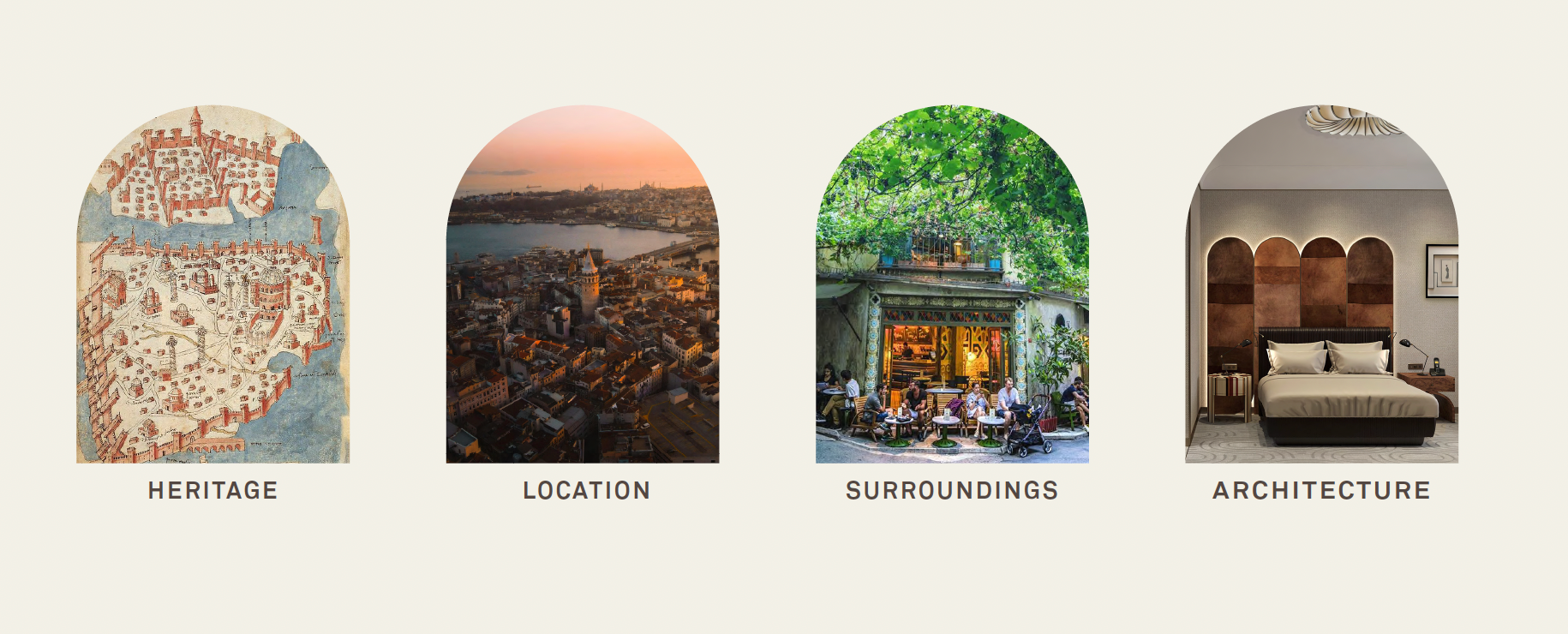
At Porta Chiara Karaköy, I-AM began by looking closely at the neighbourhood’s layered history, architecture, craft traditions and role as a gateway between cultures. These became the threads from which the brand was woven. The warmth and character of Karaköy found its way into the visual identity, while local references, from its artisanal heritage to its distinctive architectural details, shaped the experience around the hotel. The result is a brand that feels unmistakably rooted in Istanbul, yet sits naturally within the wider world of Curio Collection — individual in character, but connected by a shared sense of discovery.
Start with the Place, Not the Brand
Once the relationship between global brand and individual identity is understood, the next question becomes much more interesting: where does that individuality actually come from?
For I-AM, the answer often begins with looking closely at the place itself.
Les Temps offered a particularly rich starting point. Housed in the historic Generali Han on Istanbul’s Bankalar Caddesi, the building carries layers of the city’s commercial, architectural and cultural history. Its eclectic character, shaped by Art Nouveau and Baroque influences, became more than a backdrop for the hotel — it became the foundation for its identity.
Rather than imposing a new visual language onto the building, I-AM looked for the qualities that were already there.
The flowing lines, decorative details and asymmetry of Art Nouveau became the starting point for the logo. Its letterforms were shaped to echo the rhythm of the architecture, while a linear frame evolved into a secondary graphic element that could move across the wider identity.
The result is a brand that feels less like something designed for the building, and more like something drawn out of it.
This is where the place becomes such a powerful creative material for soft brands. The history is not simply told through words or imagery; it can be translated into form, proportion, typography, colour and material. The building gives the brand its character, and the brand, in turn, gives the building a new way to speak.
From Hotel Brand to Living Experience
Once the central story is established, the opportunity becomes much richer. The brand can begin to live through the small gestures that surround the stay.
For Porta Chiara, I-AM extended the idea of Karaköy’s artisanal culture into the guest experience through carefully considered rituals and objects: Turkish tea as part of the welcome, locally crafted backgammon, Turkish delight, and a curated map connecting guests with local makers, cafés, galleries and workshops.
These are not simply amenities. They are pieces of the place, carefully edited and brought into the hotel.
Even the signature arch continues to evolve through seasonal installations created with local makers and designers, allowing the environment to shift with the mood of the year while remaining recognisably Porta Chiara.
The designer becomes less of a decorator and more of a storyteller — selecting the right references, materials, collaborations and moments to create a world that feels coherent without becoming over-designed.
Ultimately, the strength of a soft brand lies in its ability to hold two things at once: the familiarity of a global hospitality network and the character of a very specific place. When design starts with the building, the neighbourhood and the stories that surround it, identity becomes something that is discovered rather than imposed. The result is not simply a hotel that feels local, but a living brand with a genuine point of view — one that can evolve with its surroundings while giving guests a deeper sense of where they are.