
Less than 10 mins
Curing Decision Fatigue: Designing a Fluid Streaming Ecosystem for the Modern Viewer
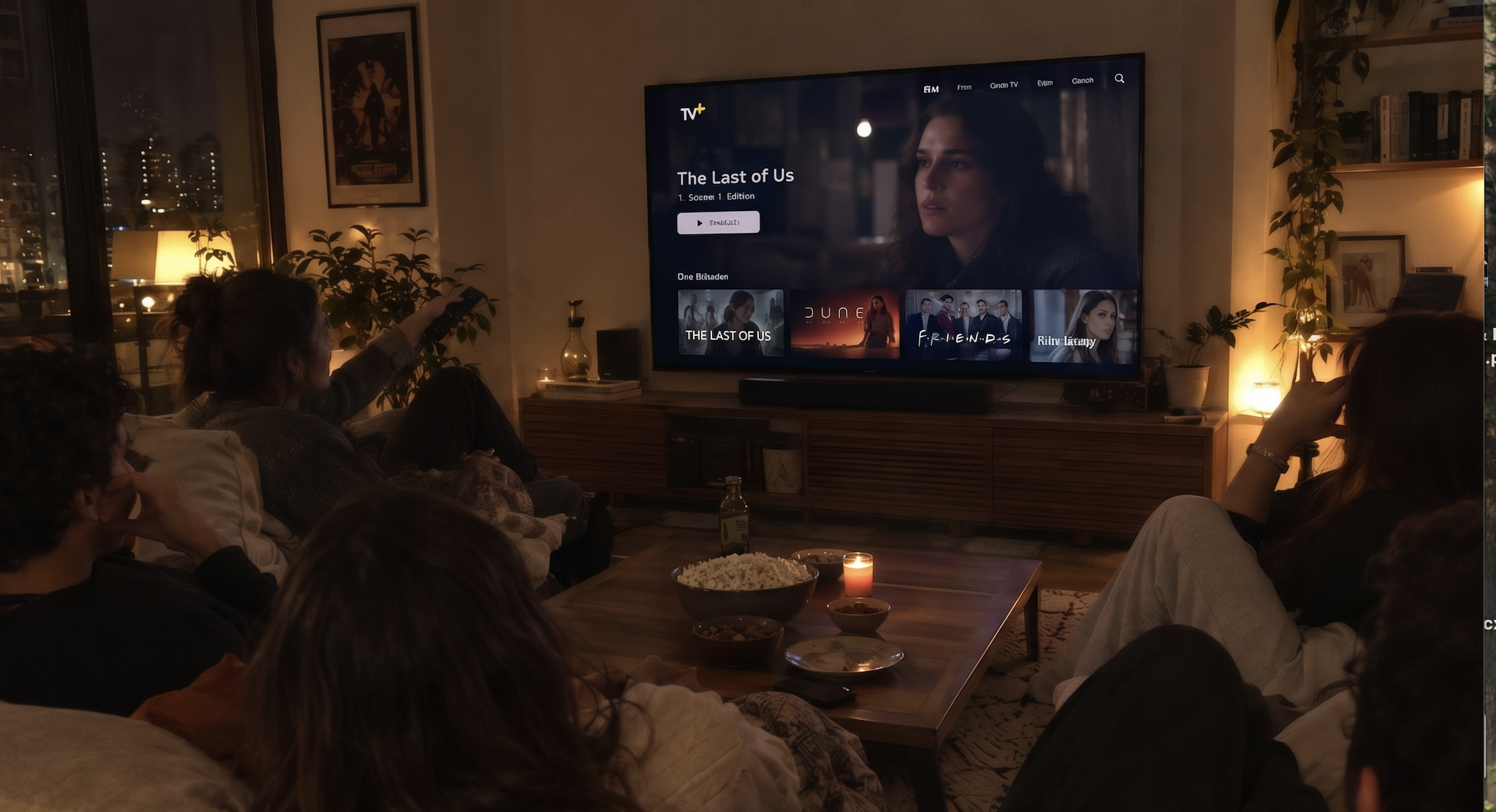
In today's overcrowded streaming market, platform churn is rarely caused by a lack of content, but by a pervasive sense of cognitive overload. As global giants continuously experiment with interface redesigns to capture user engagement, a fundamental challenge remains unresolved: viewers consistently spend more time searching than watching. Solving this choice paralysis requires a radical departure from static content catalogues. The industry must move toward fluid, context-aware ecosystems tailored seamlessly to the viewer's daily life cycle.
Turning this theory into reality requires a systemic approach that unifies the traditionally fragmented worlds of Live TV and Video on Demand (VOD). A prime example of putting this philosophy into practice is our work at I-AM on the recent comprehensive redesign of Turkey's leading digital service, Turkcell TV+. This transformation demonstrates that true UX leadership lies in crafting scalable, device-agnostic systems that respect user context, save time, and effortlessly turn scrolling into watching.
The Streaming Paradox: When More Choice Leads to Less Viewing
The transition from traditional television to SVOD (Subscription Video on Demand) has ushered in an era of choice paralysis. Industry data reveals a stark reality: a vast number of users will abandon a platform entirely if they cannot find appealing content within mere minutes.
Global leaders have spent billions trying to solve this friction, often with mixed results. Netflix’s "Play Something" (Surprise Me) feature was a bold experiment in algorithmic randomisation, aiming to bypass the selection process entirely. However, the feature was eventually retired because it fundamentally ignored the user's immediate emotional and environmental context. Algorithms can predict taste, but they struggle to predict mood.
In response, we are seeing a shift in global UX strategies. Disney+ utilises dedicated "Hubs" to compartmentalise choice and reduce visual noise. Prime Video recently overhauled its navigation to introduce cleaner carousels and clearer demarcations between included content and transactional purchases. Meanwhile, the explosive global growth of FAST (Free Ad-Supported Streaming TV) platforms proves that millions of users are actively seeking refuge from the cognitive load of VOD, craving the effortless, "lean-back" comfort of linear television. These industry shifts indicate that the future of streaming relies on a "human-first" rather than a "catalogue-first" interface architecture.
.png)
Context is King: Mapping the Viewer’s Daily Life Cycle
Understanding this "human-first" architecture begins by acknowledging that a viewer's motivations shift continuously throughout the day based on their environment and device. But how do platforms accurately capture these shifting mindsets?
The answer lies in putting qualitative research ahead of mere quantitative data points. For instance, when our team at I-AM re-engineered the Turkcell TV+ ecosystem, the entire strategy was anchored in direct human insights. Extensive home visits revealed highly nuanced viewing journeys, confirming that the same individual seamlessly transitions between different viewing modes. A user might seek the effortless background presence of Live TV during a morning routine, shift to curating safe, kid-focused content in the afternoon, and finally actively hunt for premium cinematic VODs at night.
Designing for this fluid daily cycle means orchestrating completely different behavioural states:
- The Morning "Lean-back": On a Smart TV or tablet, the user demands instant gratification with zero cognitive effort. They require background news and immediate Live TV access without complex menu diving.
- The "On-the-go" Commute: Operating a mobile device with one hand in a crowded space requires absolute precision. To cater to this reality on the TV+ platform, we prioritised precise, "fat-finger-proof" player controls within the current programme to ensure flawless viewing on the move.
- The Evening "Lean-forward": From the sofa, this state demands intentional exploration. It requires rich hero banners, ambient preview trailers, and detailed metadata to facilitate confident, immersive decision-making.
Bridging the Great Divide: Marrying Live TV and VOD
A traditional challenge in streaming platforms has been the separation of linear TV and on-demand content. While distinct interfaces for Live TV and VOD have served their purpose historically, navigating between these separate environments can sometimes interrupt the viewing flow and add to decision fatigue. US platforms like Hulu, Peacock, and Paramount+ have made commendable strides in blending Live sports grids with VOD recommendations, seeking a more harmonised experience.
Moving from this global ambition to practical execution requires rethinking the entire discovery flow. To create a more fluid journey during our redesign of TV+, a primary objective was to organically increase VOD awareness without disrupting the platform's robust Live TV audience. We achieved this by integrating VOD discovery naturally into the Live TV sections, effectively dissolving the barriers between the two formats. By strategically placing vertical VOD suggestion cards seamlessly alongside horizontal live channel cards, a frictionless discovery path emerges. Furthermore, simplifying thumbnail hierarchies and introducing auto-playing trailers for each item helps remove the guesswork from the selection process, instantly boosting user engagement in the "Explore" journey.
A 7-Screen Symphony: The Power of Absolute Visual Guardianship
The modern viewer's life cycle is inherently multimodal. The challenge for platforms is not just ensuring their app works on every device, but maintaining a unified interaction model. Users expect zero learning curve when switching from swiping on a smartphone screen during their commute to using a remote on a 10-foot Smart TV interface in their living room.
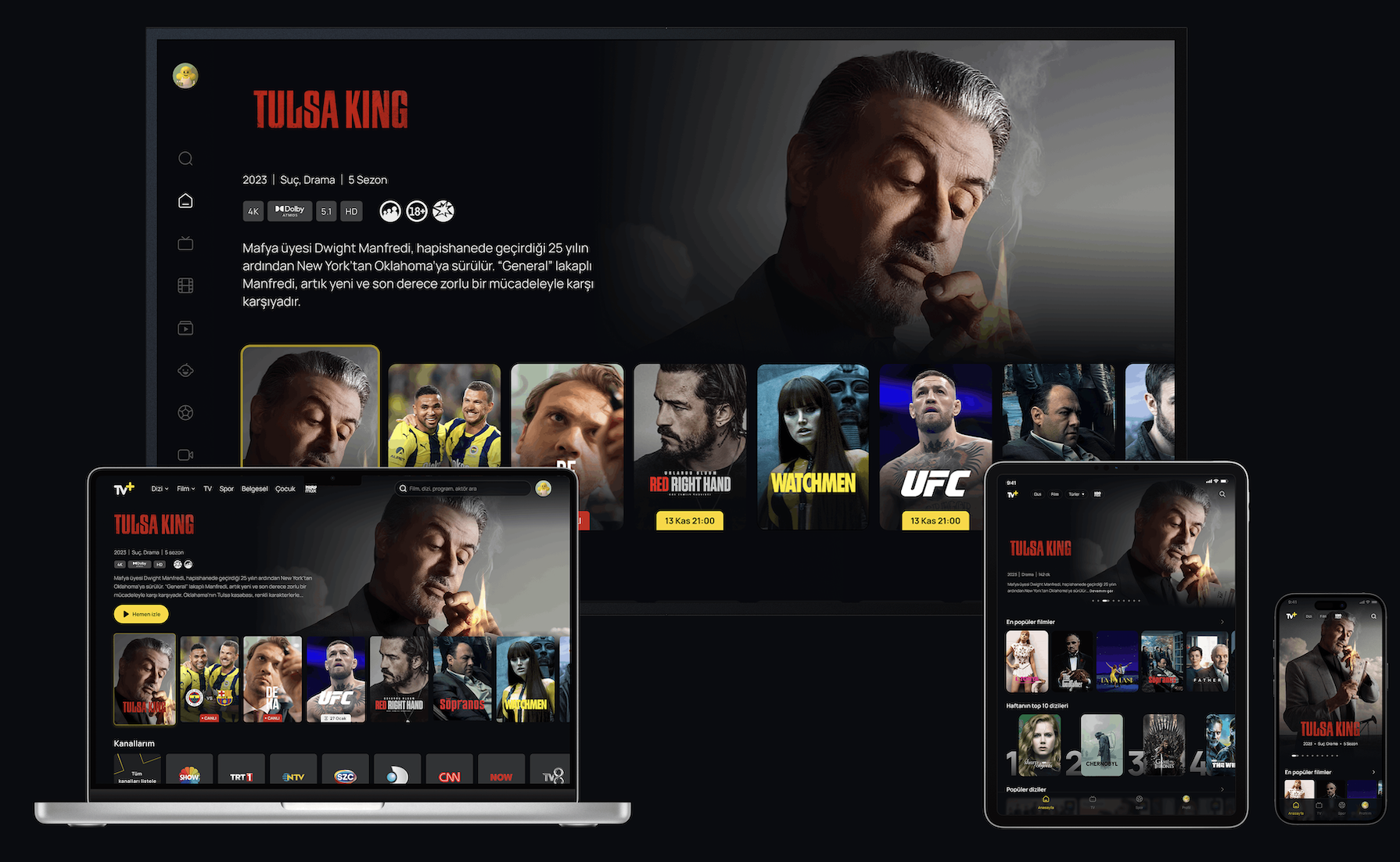
Apple TV+ and Disney+ serve as excellent examples of how unyielding visual consistency and brand-level design systems can reinforce platform identity seamlessly across various hardware ecosystems. Translating this level of visual guardianship into a unified OTT and Live TV platform demands a rigorous framework. Applying this philosophy to TV+, our team established a highly consistent, scalable, and sustainable design system deployed across seven distinct clients, including Web/Desktop, Smart TV, Mobile Apps, and Tablets.
To elevate the content and reinforce a premium visual identity, fluid animations, dark backgrounds, saturated visuals, and brand colours were carefully combined. Once a user commits to a programme, the player interface must be highly intuitive. By redesigning the player to provide direct access to key actions—changing the channel, recording, finding past programmes, and returning to the live broadcast—we ensured an uninterrupted masterclass in viewing continuity across any screen.
Conclusion: Curing Decision Fatigue Through Empathy
True UX innovation does not originate in algorithms or screen resolutions; it is born from understanding the nuances of human behaviour. Solving decision fatigue requires more than just offering a vast library of titles; it requires an empathetic approach to how, when, and where that content is consumed.
As global streaming habits continue to evolve, the platforms that succeed will be those that adapt to human routines rather than expecting users to adapt to rigid interfaces. When a platform embraces I-AM's ethos of "People Inspired Experiences" and aligns perfectly with the user's daily context—effortlessly bridging the gap between live broadcasts and on-demand libraries—it reduces cognitive load and respects the viewer's most valuable asset: their time. In the highly competitive hybrid streaming era, the ultimate solution to choice overload is crafting fluid, context-aware ecosystems that seamlessly integrate entertainment into the rhythm of the modern viewer's life.